What is Acupuncture?

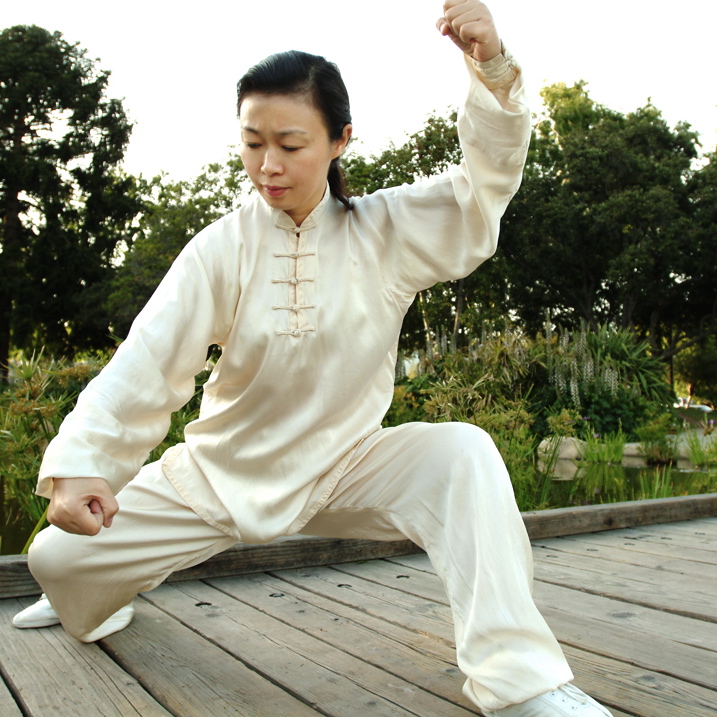
Acupuncture is one form of therapy used within the coherent system of healing known as Oriental Medicine. Oriental Medicine includes herbology, physical therapy, dietetics and Tai Chi, and is a complete medical system unto itself and is not another branch of modern Western medicine. Acupuncture evolved from principles and philosophies unique to Oriental thinking and Oriental Medicine, and is most effectively applied when done in accordance with those principles.
An acupuncturist views health and sickness hinges on concepts of "vital energy," "energetic balance" and "energetic imbalance". Just as the Western medical doctor monitors the blood flowing through blood vessels and the messages traveling via the nervous system, the acupuncturist assesses the flow and distribution of this "vital energy" within its pathways, known as "meridians and channels".
The acupuncturist is able to influence health and sickness by stimulating certain areas along these "meridians". Traditionally these areas or "acupoints" were stimulated by fine, slender needles.
Today, many additional forms of stimulation are incorporated, including herbs and tai chi to adjust the "vital energy" so the proper amount reaches the proper place at the proper time. This helps your body heal itself.

Acupuncture Modern Views

Modern studies have revealed that acupuncture stimulates one or more of the immune systems, which can, under certain circumstances, increase the rate of healing response. This may be sufficient to cure a disease, or it might only reduce its impact (alleviate some symptoms). These findings can explain most of the clinical effects of acupuncture therapy.
According to this interpretation, acupuncture is seen as a stimulus directed to certain responsive parts of the nervous system, producing the needling sensation and setting off a biochemical cascade which enhances healing. Some acupuncture points are very frequently used and their applications are quite varied: needling at these points may stimulate a “global” healing response that can affect many diseases. Other points have only limited applications; needling at those points may affect only one of the signaling systems. It is common for acupuncturists to combine the broad-spectrum points and the specific points for each treatment. Some acupuncturists come to rely on a few of these broad-spectrum points as treatments for virtually all common ailments.
For many nervous system functions, timing is very important, and this is the case for acupuncture. The duration of therapy usually needs to be kept within certain limits (too short and no effect, too long and the person may feel exhausted), and the stimulation of the point is often carried out with a repetitive activity (maintained for a minute or two by manual stimulation—usually slight thrusting, slight withdrawing, or twirling—or throughout treatment with electro-stimulation). It has been shown in laboratory experiments that certain frequencies of stimulus work better than others: this might be expected for nervous system responses, but is not expected for simple chemical release from other cells.

Acupuncture Side Effects

acupuncture is safe and effective, free from adverse or addictive side effects. Quite often, a sense of relaxation and well-being occurs during and after treatments. While undergoing therapy for one ailment, other problems may resolve concurrently. This is a common side benefit that again demonstrates the value of balancing the quality and quantity of "vital energy" within the entire person.

Acupuncture Limits

Oriental Medicine and acupuncture are powerful healing tools, but they are not panaceas nor the solution to every health care problem. Both Western and Oriental Medicine have their respective strengths and weaknesses, which is why in modern China, the two systems are used together. When appropriately combined, the patient is well served.
Generally speaking, acute, life threatening conditions are best handled by Western medical doctors. Routine health problems and chronic conditions, for which drug therapy and surgery have not been effective, often benefit from Acupuncture and Oriental Medicine.

Does Acupuncture Hurt?

Most people who have had acupuncture would describe it as virtually painless or far less painful than plucking out a hair. The sensations that follow range from nothing at all, to mild tingling, to slight numbness/achiness, to electrical pulsations in areas distant from the site of insertion. All these sensations usually subside once the needles are removed. The needles used for acupuncture are much smaller that the standard hypodermic needle, do not draw blood and are solid, not hollow.

What is treatment like?

Usually patients leave in less discomfort and are more functional than when they walked in. Sometimes the effects are too subtle to perceive, especially in the beginning of treatment. Yet after 5 to 10 treatments the improvements become more and more apparent.

Is Acupuncture Safe?

Yes. Licensed Acupuncturists know the human anatomy well, and insert needles in a safe fashion. The instruments used to penetrate the skin are either pre-sterilized and disposable after a single use.
The practitioner is well aware of the concern over infectious diseases, and takes every measure to insure cleanliness as all health care professional do.
Bleeding rarely occurs, unless done so on purpose in specific situations. Even then the amount is minimal and in no way dangerous.

What Services Can a Practitioner of Oriental Medicine/Acupuncture Provide?

Acupuncture, Therapeutic Exercises, Herbal Medicine, Diet therapy and Oriental Medical Diagnosis.