World Health Organization validates acupuncture as a proven treatment for many diseases.

According to the World Health Organization the following conditions are treated by Acupuncture:

The World Health Organization (WHO), who is the international authority concerning health-related matters, has compiled a list of symptoms, syndromes, disease processes, pathologies, traumas and conditions that have definitely been proven as effectively treated by acupuncture. The WHO has also compiled a list of diseases, symptoms and conditions for which acupuncture has shown definite therapeutic effects, but more proof is needed to establish acupuncture as a mainstream form of treatment. Should a curious patient, insurance company or colleague require proof of acupuncture’s effectiveness, the following list is something you will want to keep on file. Its use will be inevitable.

In an official report, Acupuncture: Review and Analysis of Reports on Controlled Clinical Trials, the WHO (WHO) has listed the following symptoms, diseases and conditions that have been shown through controlled trials to be treated effectively by acupuncture:

  • low back pain
  • neck pain
  • sciatica
  • tennis elbow
  • knee pain
  • periarthritis of the shoulder
  • sprains
  • facial pain (including craniomandibular disorders)
  • headache
  • dental pain
  • tempromandibular (TMJ) dysfunction
  • rheumatoid arthritis
  • induction of labor
  • correction of malposition of fetus (breech presentation)
  • morning sickness
  • nausea and vomiting
  • postoperative pain
  • stroke
  • essential hypertension
  • primary hypotension
  • renal colic
  • leucopenia
  • adverse reactions to radiation or chemotherapy
  • allergic rhinitis, including hay fever
  • biliary colic
  • depression (including depressive neurosis and depression following stroke)
  • acute bacillary dysentery
  • primary dysmenorrhea
  • acute epigastralgia
  • peptic ulcer
  • acute and chronic gastritis
  • The foregoing list is absolute concerning acupuncture’s effectiveness; however the report continues with three more categories:
  1. Diseases, symptoms and conditions for which the therapeutic effect of acupuncture has been shown, but further proof is needed (68 specific conditions). These conditions are effectively treated as in the first category; it’s just that more trials are necessary to establish the proof scientifically.
  2. Diseases, symptoms and conditions reporting some therapeutic effects for which acupuncture is worth trying (nine conditions).
  3. Diseases, symptoms and conditions in which acupuncture may be tried, provided the practitioner has special modern medical knowledge and adequate monitoring equipment (eight conditions).

ALKALINIZING GREEN SMOOTHIE

Ingredients

  • ½ medium avocado, pitted and peeled (no need to use organic avocado)
  • ½ organic lemon unpeeled (depending on blender)
  • 1 cup organic spinach or romaine lettuce
  • ½ cup organic flat leaf parsley
  • 1 level scoop Sun Warrior ORMUS Natural Green Powder
  • 8 ounces Natural Value Organic Coconut Milk
  • 1 tablespoon ground organic flax seeds
  • 1 tablespoon ground organic chia seeds
  • 1 teaspoon organic ground ginger powder or ¼” coin fresh ginger
  • 8 ice cubes (optional)
  • Filtered water if texture too thick

Ox Tail soup

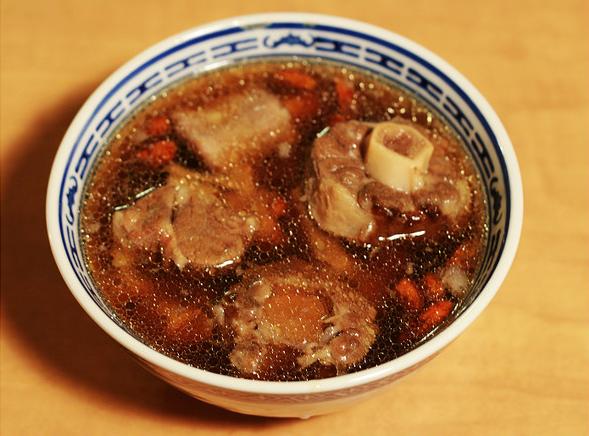
Bowl of Chinese oxtail soup

Chinese Oxtail Soup Recipes
Oxtail is a good ingredient for slow cooking soups. The gelatin in the cartilage imparts a smooth richness to the soup.
One recipe here is a hearty oxtail soup recipe with potatoes, tomatoes and carrots. The other one is a slightly brothy soup with Chinese herbs.

Recipe 1: Oxtail soup with potatoes, carrots and tomatoes
This is a wholesome hearty soup with nutritious root vegetables.
Ingredients
• 800g oxtail
• 3 potatoes
• 2 carrots
• 2 tomatoes
• 2 pieces of ginger
• 2 tbsp cooking wine
• 2 litres of water
• 2 tsp salt
Directions
1. Cut the oxtail into sections
2. Wash the oxtail and soak in water
3. Bring half a pot of water to a boil, add the 2 pieces of ginger and 1 tbsp of cooking wine
4. Add the oxtail and cook for about 10 minutes
5. Remove from the water and clean the oxtail pieces
6. Bring 2 litres of water to a boil
7. Add the ginger, oxtail and cooking wine
8. Bring the water back to a boil
9. Lower the heat and simmer for 30 minutes
10. Remove any floating froth from the surface of the soup
11. Remove the ginger
12. Peel the potatoes, carrots and tomatoes, Cut into pieces
13. Add them into the soup
14. Bring the soup to a boil
15. Lower heat and cook for another 40 minutes
16. Season with salt
17. Serve


Recipe 2: Herbal oxtail soup recipe

This soup takes 3 hours. Use the slow cook; it is the most excellent cooking pot for this soup.
Ingredients
• 1 oxtail
• 2 potatoes
• 5 ginseng teabags
• 1 section ginger
• 1 tbsp chinese Goji berries
• 1 litre water
• 1 tbsp cooking wine
• Salt and pepper
Directions
1. Cut the oxtail into sections
2. Wash and soak in water
3. Parboil the oxtail
4. Peel and cut the potatoes into big chunks
5. Bring the water to a boil
6. Add the potato, oxtail, ginger and cooking wine
7. Bring the water back to a boil
8. Wash the wolfberries and add to the soup
9. Lower heat and simmer for 3 hours. The soup should turn milky
10. Cook for another 10 minutes
11. Remove the ginseng tea bags
12. Season with salt and pepper
13. Serve
Ginseng imparts a herbal taste and fragrance to the soup. If you have never tried ginseng before, reduce the number of teabags used so that you get a milder taste.

Chinese Medicine and Emotions

A Chinese proverb says, “ if one could laugh three times a day he would live longer” This means, if one can always keep himself in a pleasant mood, it is one way to preserve health and promote health. When a person is in a pleasant mood the body is relaxed. Relaxation removes the inhibition of nerve supply to the organs and promotes the functions of the organs. When people smile there is lower blood pressure, decreased heart rate, easier breathing and less muscle tension. Therefore, a healthy mind and a healthy body are the greatest blessings of mankind.

The female reproductive hormone estrogen and progesterone can dramatically affect the brain’s biochemistry. Women’s brains are different Why is it women have so many unique psychiatric and medical needs? Why are they more likely to become depressed or anxious or even psychotic? Certainly our hormones play an important part.

Traditional Chinese medicine takes into account both external and internal factors in the creation of an individual’s diagnosis. The current emotional state of the patient is one internal factor that traditional Chinese medicine believes to be very important. In fact, emotions are believed to directly correlate to specific organs and their states of being. Traditional Chinese medical theory believes the body is in the control of the Five Elements: Earth, Wood, Fire, Water, and Metal. Each element corresponds to a specific organ as well as a specific emotion. The emotions are not believed to always be the direct cause of an ailment, but have an undeniable connection with the progress and condition of the problem.
The Suwen, or Book of Plain Questions states “The five yin-organs of the human body produce five kinds of essential qi, which bring forth joy, anger, grief, worry, and fear.” According to the Five-Element school of thought, anger is associated with Wood; joy is associated with Fire, pensiveness with Earth, grief with Metal, and fear with Water. The liver is associated with Wood and therefore with anger, the heart with Fire and joy, the spleen with Earth and pensiveness, the lung with Metal, and grief and the kidney with Water and fear. This is not to say that to experience any of these emotions means that the related organ is out of balance but, rather, that any extreme case or fluctuation of these emotions may be related to a problem with that organ.
Emotions in TCM have slightly different meanings than their Western interpretations. In TCM joy, for example, refers to a state of agitation or over-excitement, rather than elation. Related to the heart, this emotion is correlated with heart palpitations, repeated agitation, and insomnia. Anger in TCM is considered to represent resentment, frustration, and irritability. An excess of rich blood is believed to make one prone to anger, and can affect the liver, causing this organ’s energy to rise to the head and result in headaches or dizziness. Pensiveness is thought to be an excess of mental stimulation that can affect the spleen (which rules over vital energy). This can result in fatigue, lethargy, and difficulty concentrating. Lungs are associated with the feeling of grief. Unresolved grief can lead to problems with general energy and one’s qi (life force) because the lungs are thought to distribute this throughout the body. Like the other emotions, fear is considered a normal and at times, inevitabe e emotion. However, if it becomes chronic, or settles as a deep anxiety, the kidneys can be affected. The kidney’s ability to hold qi may be impaired, and involuntary urination can also occur.
Traditional Chinese medicine is unique in its belief that cause and effect are not linear, but circular. This means that the cause of an ailment may be an emotion, but also that an ailment can lead to an emotion. By striving to balance the organ related to the person’s emotional state, the emotion can be balanced as well, and visa versa. Acupuncture is one way to accomplish this re-alignment. Acupuncture is the practice of gently inserting needles into specific points on the body to benefit a person’s qi, or life force. There are certain points used in acupuncture that accord with specific organs, and treating these points is how feelings and acupuncture can interplay.
Emotions are considered to be normal and healthy, it is only when they become extreme or uncontrollable that they can open the door to disease. TCM believes them to be the major internal cause of disease within the body, but also the most easily influenced – meaning, that with the right attention and treatment, emotions and their corresponding ailments can change.

Menopause and TCM–How Chinese medicine understand menopause

Traditional Chinese Medicine (TCM) can treat menopause effectively and naturally. Every woman should go through menopause with no signs or symptoms. The symptoms of menopause such as hot flashes, insomnia, depression, and dryness are all symptoms of the body being out of balance. Acupuncture and herbs can help bring the body back to balance and relieve symptoms completely naturally with no side effects.

The female system is an incredibly beautiful, complex balance. It is an individual module of the creative universe. A woman is usually a marvelous thing to be, but the intricacies of her body are delicately tuned and can become unbalanced or obstructed easily, causing pain, and poor function. A woman is such a wholly bound together person that imbalances often cause lack of union between mind and body. She loses the accustomed oneness with herself, resulting in physiological and emotional problems.

All of Chinese Medicine is about the restoration of balance in the human body.
Yin: Nourishment of the body (feminine, rest, coolness)
Yang: Functions of the body (masculine, activity, heat)

Vital Substances:
Blood: Renewable substance
Essence: Genetic dosage that is gradually used up

Men depend on Qi (activity/Yang)
Women depend on Blood/Essence (nourishment, Yin) as the foundation of reproduction cycle: includes fertility, childbirth, and lactation. Blood is more than just the menses.

Organs & Their Functions:
Chinese organs have the same names but have additional functions of Western Organs

Kidney: excretes urine/ holds the Essence (incontinence)
Spleen/Stomach digests food/creates blood
Liver holds the Blood
Heart moves the Blood

Emotions:
Lung–Grief
Kidney – fear (I was so frightened I almost peed in my pants)
Liver: I was so angry I saw red, stress & frustration;
Spleen is worry; loss of appetite
Heart: anxiety & nervousness; heart palpitations

Women’s physiology and pathology during different time of life in TCM:
Adolescents the Kidneys (Essence) is immature
Child bearing years: Liver & Spleen
Peri-menopause/menopause: Kidney Yin & Yang deficiency & imbalance

According to Chinese herbal medicine and acupuncture, we use treatment that will stimulate the body’s own ability to heal itself. We look at patient’s mental and emotional state as well, not just their physical health. We view the patients as a physical, emotional and spiritual whole, not as a collection of ailing body parts to be treated separately.
Acupuncture can alleviate many menopausal symptoms by rebalancing the hormonal system, especially headaches and migraines, hot flushing, heavy flooding periods, back pain and sagging skin tone. Heavy and erratic menstrual bleeding in perimenopausal women can be relieved by this technique. It also relieves the pain and headache associated with menstruation. Acupuncture also has positive effects on insomnia and stress. Treatment can also improve the mobilization of Qi (chi) to the nervous system to aid poor memory and concentration.

Prevention and Self-Help
Three main principles
1. Keep your emotional balance: daily relaxation
2. Exercise, Taichi, Qigong, yoga, meditation
3. Helping yourself through diet
9 food steps
1. Eat more tofu and soy
2. Eat more fruits and vegetables
3. Eat beans more often
4. Eat more of the right fats
5. Choose your beverages wisely; Drink lots of water, a grass or two of milk, and a grass of orange (or other citrus), carrot, or purple grape juice every day; Limit coffee and caffeinated beverages, soda, and alcohol
6. Don’t eat at night
7. Eat calcium –rich foods every day
8. Avoid high fat/high sugar foods to minimize calories
9. Add flaxseed to your diet

The Estrogen Food List

Legumes
Alfalfa, black-eyed peas, chickpeas (garbanzo beans). Green or French beans, green peas, lentils, mung bean sprouts, navy beans, peanuts, red beans (adzuki beans), red clover, soybeans, soy sprouts, split or field peas.
Oils
Corn, flaxseed, olive, sesame, soybean, sunflower & canola oils
Vegetables
Beets, bok choy, broccoli, cabbage, carrots, cucumbers, garlic, green peppers, mushrooms, potatoes, pumpkin, rhubarb, seaweeds, squash, sweet potatoes, yams
Spices & Herbs
Black cohosh, cloves, dong gui, fennel, ginger, hops, licorice, sage, tea, thyme, turmeric
Seeds
Flaxseed, sesame seed, anise seed, pumpkinseed, sunflower
Fruits
Apple, cherries, grapes, olives, papaya, pears, plums, pomegranates, prunes
Cereals/Grains
Barley, corn, oats, rice, rye, wheat