Introduction to Qigong

  1. A brief history of qigong

Qigong is the key component of traditional Chinese medicine with a history of five thousand years (in record), which can be divided approximately into four major periods.
(1) The period of united heaven, earth and man (before 206 BC): This period was marked out historically by the book “Yi Jing” (Book of Changes) introduced in 1122 BC, which talked about Qi, the concepts of the natural energies and the integration of Heaven, Earth, and Man.
(2) The period of Qigong mixed with religion (206 BC – 500 AD): During Han dynasty (206 BC) Buddhism and meditation methods were imported from India, which brought Qigong practice and meditation into the religious Qigong era.

(3) The period of martial art Qigong (500 AD –): In the Liang dynasty (502- 557 Ad), it was discovered that Qigong could be used for martial-art purposes. From 1911 on, Chinese Qigong training was mixed with Qigong practices from India, Japan and many other countries because of the ease of communication in the modern world.

(4) The period of modern Qigong research: (1980s – present). As more and more Qigong practitioners came out to show the public their amazing abilities and to teach the public to practice Qigong, it gradually emerged from the traditional secret transmission into a practice found in the public domain and scientific research.

  1. Definition of qi and qigong
  1. What is Qi
  • Heaven Qi: made up of forces which heavenly bodies exert on the earth, such as sunshine, moonlight, and the moon’s affect on the tides.
  • Earth Qi: absorbs the heaven qi, and is influenced by it.
  • Human Qi: influenced by the heaven and earth qi.
  1. What is Dan Tian

The Dan Tian is a spot around a couple of inches below the navel, and located inside the body. It is where a martial artist’s power comes from. The Dan Tian is sometimes divided into sections.

  • Lower Dan Tian: associated with physical energy, and sometimes sexuality.
  • Middle Dan Tian: deals with respiration and the health of internal organs.
  • Upper Dan Tian: relates to the consciousness, or shen, and your brain.
  1. The three treasures-Jing(essence), Qi, and Shen(spirit)
  • Essence: the most original and refined part of every thing.
  • Qi: the internal energy of your body.
  • Shen(Spirit): the center of the mind.
  1. What is qigong

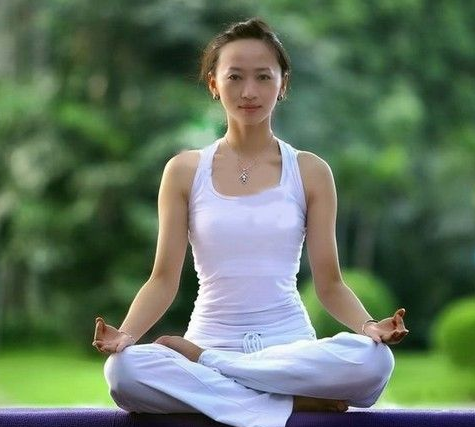
Qigong is an ancient Chinese health care system that integrates physical postures, breathing techniques and focused intention.

The word Qigong (pronounced chi kung) is a combination of two ideas: “Qi” means air, breath of life, or vital energy of the body, and “gong” means the skill of working with, or cultivating, self-discipline and achievement. The art of Qigong consists primarily of meditation, relaxation, physical movement, mind-body integration, and breathing exercises. Practitioners of Qigong develop an awareness of qi sensations (energy) in their body and use their mind to guide the Qi. When the practitioners achieve a sufficient skill level (master), they can direct or emit external Qi for the purpose of healing others.

In traditional Chinese medicine, good health is a result of a free flowing, well-balanced energy system. It is believed that regular practice of Qigong helps to cleanse the body of toxins, restore energy, reduce stress and anxiety, and help individuals maintain a healthy and active lifestyle.

  1. Different type of qigong

Quient qigong:

Dynamic qigong: Ba duan jing, Taichi

There are many different types of Qi gong exercises and many new forms are being devised. The basic concept behind Qi gong is the mindful harmonization of body, mind, and spirit in a focused manner. Hence, whether the Qi gong requires movement or stillness meditation, the body is relaxed and the mind is focused on specific ideas or parts of the body. One of the most common areas of focus is below the navel and is known as the Tan Tian, which is thought to be a major energy center. Chinese medicine holds that when the body and mind are harmonized through the practice of Qi gong, the Qi can be generated, blockages of Qi can be released, and health increases.

Some Qi gong styles involve movements that may be combined into graceful forms such as Tai Qi Quan or the Eight Pieces of Brocade, both which have become a popular exercise for promoting health and reducing stress. Other types of Qi gong involve meditation and visualization exercises on a specific Zang Fu Organ, Meridian, or even sounds and colors to achieve therapeutic effects in the body. Another type of Qi gong involves massaging a specific part of the body while concentrating on balancing the Qi in that area. Qi gong exercises may be performed standing, sitting, or lying down. Most Qi gong traditions recommend that individuals practice once or twice a day for general health prevention. Patients with specific disorders who have been assigned Qi gong exercises to correct a Pattern of Disharmony may practice more frequently.

  1. Qigong training theory
  • Regulating the “Shen” (mind and spirit): It refers to the regulation of the mind into a quiet and relaxed state. It helps to increase the coordination of the central nervous system.
  • Adjusting the breath: There are many styles of breathing technique. They are natural breathing, chest breathing, normal abdominal breathing, reverse abdominal breathing, breath retention, skin breathing, transport breathing, sun breathing, bone breathing, palm and sole breathing, and more. Correct breathing has 8 qualities: silent, fine, long, slow, deep, soft, even or continuous.

     Nature breathing:

Natural breathing is the beginner’s breath. Rather than controlling your breathing, first simply observe your breath and feel its natural movement in your body. Next, as you inhale, breathe down into your lower lungs. This will push your diaphragm down and expand your abdomen. Breathe to about 70-80% of your lung’s capacity. Forcing yourself to fully expand your lungs may cause tension in your rib cage which is counter productive. After your inhalation reaches its peak, exhale smoothly and allow your diaphragm to relax. As your exhalation begins to reach its end, gently contract your abdominal muscles pulling in your stomach slightly.

     Abdominal breathing:

Through deep and gentle abdominal breathing exercises, oxygen intake of the lungs dramatically increases. Thus, the cardiovascular and other essential systems of the body are strengthened. In particular, this abdominal style of breathing creates a stimulating function of the internal organs, which would result in the increase of blood circulation to the organs, secretion of the digestive system, and movement of the stomach and intestines to improve absorption of nutrients.

The following 8 qualities are important in developing your breath.

  • Silent: keep your breath as quiet as possible by breathing slowly and smoothly.
  • Fine: breathing through your nose or mouth should be fine like a breeze, not choppy and rough.
  • Slow: breathing should follow an even timing. Don’t rush to the next breath. If you are running out of breath, take a few sips of air to keep the oxygen flow going and then adjust your breathing so that it is comfortable.
  • Deep: remain as relaxed as possible to avoid muscular tension in the chest. This will allow you to breathe deeply with your diaphragm.
  • Long: breathing deeply and slowly will make your breath long. One key reason why we do rhythmic arm movements is to train one in long, slow deep breathing.
  • Soft-relaxed: keep your body soft and relaxed while you breath.
  • Continuous-rhythm: each inhalation flows naturally into the exhalation. Note: Other breathing styles may retain (hold) their breath for a period. However, this is not the case with the beginner’s natural breathing.
  • Even: keep the length of your inhalation and exhalations about the same time.
  • Improvement of the body: This refers to the body’s posture and movement through exercise and self-massage. The effects of qigong are slow and gentle. In addition, qigong requires a close coordination of motion, mind, and breath, which would be helpful in increasing blood circulation and correcting functional disturbances.
  1. Zhan Zhuang (Standing pole)

Zhan Zhuang is an integral aspect to any traditional Qi Gong system.  This Qi Gong includes standing positions that develop rooting and grounding to the earth.

1). Basic Standing Posture: Wu Ji Empty Posture (Wu Ji Zhuang)

  • Stand up in a relaxed manner.
  • Your feet should be separated from 6″ to 18″.  Both of you feet should be pointed straight ahead and flat on the floor.
  • Relax your body
  • Clear your mind.
  • Keep a pleasant look on your face – a soft gentle smile is beneficial.
  • Keep your head up and look forward.
  • Your eyes should be open, with a soft and wide angle focus.
  • Breathe in and out in a relaxed, easy, and regular manner. Use the abdominal breathing Breathe deeply and exhale fully. Breathe in through your nose and out through your mouth. Keep your lips parted slightly. Breathing should be natural, relaxed, and not requiring your attention.
  • Your arms should hang down in a relaxed manner at your sides
  • Relax the shoulders and let them hang down.

This posture is often called the “Wu Ji” posture in Taijiquan.  It is the resting position, the position before any motion begins a state of “grand emptiness.”  It is the primordial condition – empty, free, motionless, without qualities.  It precedes the movement of Yin/Yang both logically and temporally. The classics talk of Wu Ji giving birth to Tai Ji, emptiness transforming itself into the manifold of cyclic dualities.  We should note that this posture is very similar to the Yoga posture of Tadasana – the Mountain Pose.  We should stand like a Mountain: strong, stable, unmoving, grand, still, aloof, above the mundane, powerful, accepting but unbroken by the storms of ideas, and avalanches of strong emotions

2). Embracing Posture (Ping Bu Cheng Bao Zhuang)

Start in the Empty Posture as described above. When you have settled down and feel calm, lift your arms slowly in front of you in a shape of embracing a big balloon in front of your chest. The hands should be in front of your shoulders, with the palms facing you and the fingers of both hands pointing at each other. Keep your fingers open and imagine small cotton pads placed between fingers, supporting them in their open position. Your hands are soft and slightly curved. Feel your elbows resting on soft pillows.

With practice, you will be able to achieve a very relaxed feeling. When that happens, you can move on to the next step, creating kinaesthetic images.

Up to now, your elbows were as if resting on soft pillows, keeping your shoulders relaxed. Now imagine that your elbows are touching balloons floating on water. Your task is to keep the balloons under your elbows. If you lift your elbows, the balloons will be free to float away. If you press a little more, they will be pressed into the water and pop out to float away again. Imagine that the big balloon you are embracing is very fragile and filled with helium – if you press a little more, it will burst, if you press a little less, it will float away. The feeling created is that of sticking very lightly to the balloon but making sure not to let it slip from your embrace. The purpose of these types of images is not to become skilful in creating them but in exploring how the body feeling changes and gradually becoming aware of the inside body structure and body’s unity. You can start slowly swaying forward and back. Keep your body balanced and experience the movement as a passive movement; for example as if standing in a slowly flowing river that keeps changing its direction. As you get better in experiencing the ‘inner flow’ within your body, you can discard the images.

3). Covering Posture (Ping Bu Fu An Zhuang)
From the Embracing Posture, keeping your elbows still, slowly lower your forearms and turn your hands palms down. The arms should be horizontal, with fingers of each hand pointing inwards at around 45 degrees angle. Feel as if your arms and hands are resting on a plank of wood that is floating on water. Feel the plank floating on water away from you and follow that motion with your body. There should not be any change of your arms in relation to your body. Then feel the plank floating towards you and again follow the motion. All other points remain the same.

4). Combat Postures

Practice of Combat Postures is the first step in acquiring Internal Power. Their role is to make the Combat Stance seem as natural as possible, strengthen legs and create a connection between them, and start using the whole-body connection to ‘sense strength’ in the body.

5). Combat Stance

Stand with your heels about fist-width apart, toes pointing slightly out. Transfer your weight onto your right leg and shift the left foot forward, in the direction the foot is pointing and lift the front heel off the ground. Put about a quarter to a third of your weight onto the front foot. Keep a slight push from the front foot into the back one and vice versa. Each of your knees should point in the same direction as the respective foot. Feel as if there is an elastic band between the front toes and your forehead and between the front knee and the opposite hip. At all times feel that you are holding these elastic bands slightly stretched. The body should be held as described for the Health Postures. Eyes should be open, looking into distance.

6). Almost-Movement

Observe closely what happens in your body just before you move. Say you get ready to move but you ‘abort’ the move just before it actually happens. If you try it few times, you are quite likely to notice a certain type of feeling in the part of the body that you were going to move. At the beginning, it is probably easier to feel it in your hands or arms, so if you have difficulty with it, choose a hand movement. Eventually you will be able to feel a sort of ‘inner’ activity in your body. What happens is that as you form an intention to move and as you get ready to move, there will be some muscular activity associated with stabilizing your body in such a way so as to enable the movement to take place. Normally this muscular activity is not noticed as it gets subsumed in the sensations of the actual move that normally takes place. We can’t call it a movement, as there is nothing actually moving yet it is more than ‘not moving’ – that’s why I call it almost-movement. This is the basis of ‘sensing strength’. In the following Zhan Zhuang exercise we practice moving or sensing in forward-back direction.

7). ‘Primordial Void’ Posture (Hun Yuan Zhuang)

Stand in a Combat Stance and as in the Health Postures above, create some image in your mind that will make you calm and happy; keep it in your mind and your body throughout the training. Slowly lift your arms in front of you as in the Embracing Posture described above but this time the left hand (assuming the left foot is in front) is slightly more forward and up than the right hand. Apart from the position of your arms and legs, the rest should be the same as in the Embracing Posture (including creation of a calm and peaceful feeling).

8). Sensing Strength in a Forward-Back Direction
Keep a very soft and relaxed body structure and create a kinaesthetic image of exerting a great deal of strength. For example, imagine that you are embracing a tree and try to uproot it by pushing with your body forwards. At the same time, imagine that you are inside another, hollow, tree with your arms and the back in contact with the tree and you try to uproot that one by pushing with the back of your arms. Alternate this effort with ‘moving’ in the opposite direction – pulling the inside tree with your arms and pushing the outside tree with the back of your body. Always use the whole body. Do not imagine that you are actually succeeding in any of these tasks – the trees are too big and just won’t budge. During your practice, you stay relaxed and nearly still with perhaps just very small movement. Little by little you will get a feeling of almost-movement.

After a period of practice (say several weeks), slowly work the following six points into your posture:

  • lift your foot arches and feel as if your feet are grasping the ground
  • feel your pelvis horizontal and from there a slight lifting of your perineum
  • feel your diaphragm horizontal by relaxing down the front bottom edge of your ribcage which should fill-out your lower back (“relax your chest and raise the back”)
  • feel the top of the chest/bottom of your neck horizontal
  • feel the bottom of your mouth relaxed and horizontal
  • feel the top of your head horizontal

Tips for Zhan Zhuang practice

1). Establish a regular routine

The best way to achieve that is to start with very little but every day. What is ‘very little’? Say 10 seconds – and I do not mean it as a joke! If you start with 10 seconds, you’ll eventually be able to go to hours with no problem (if you wish).

2). In Zhan Zhuang you are training your Mind

The best way to train your mind is to practice only when you concentrate. That’s why 10 seconds is probably a good starting point. As you keep practicing, you naturally start to concentrate for longer and so you practice longer. Even when you can stand for a long time, if one day you can’t concentrate, stop practicing. If you force yourself to stand for a set period, you learn not to concentrate, the practice becomes boring and soon you would give up. When you concentrate, it’s enjoyable and you progress faster.

3). Pain is not necessary

Pain is distracting. Remember, you are training your mind – if the pain in your legs or arms distracts you, you can’t concentrate, so stop practicing or change to another posture. If you have pain in any of your joints, stop practicing – you should never feel pain in your joints. Muscle pain could be OK, but best to check with someone who would know (for example your teacher).

  1. Ba Duan Jing (The Golden Eight Exercises)

The Golden eight exercises is a kind of dynamic qigong practice. It is derived from one of the oldest health strengthening exercises in China which was creates 800 years ago.
Ba Duan Jing consists of two styles: sitting and standing type.

  • Sitting Ba Duan Jing (Golden Eight Exercises)

The sedentary style adopts a sitting position with concentrated mind and attention to one’s breathing. This particular type incorporates knocking teeth, shaking head, gargling throat, massaging the kidney area, swaying shoulder, pressing the scalp, stretching the sole of the foot, etc.

  • Standing Ba Duan Jing (Golden Eight Exercises)

The active style adopts a standing position emphasizing body movement.

Sitting Ba Duan Jing (Golden Eight Exercises)

Form1:

Strike Teeth in deep Meditation
1. Sit still in deep meditation, legs crossed, and hands loosely clench.
2. Strike upper teeth with lower teeth 36 times.
3. Interlock fingers behind head, and focus on breathing rather than on external event. Take nine deep breathes.
4. Move hand to cover ears, and tap back of head 24 times with middle finger pressed under index finger.

Form 2

Shake the Heavenly Pillar

1. Sit with legs crossed, back and shoulders are straight, but relax.
2. Join hands in front of belly.
3. Slowly shake head and shoulders to left and right 24 times, and focus on breathing.

Form 3

Gargle with Saliva
1. Sit with legs crossed, back and shoulders are straight, but relax.
2. Raise hands over head.
3. Stir tongue 36 times between hard and soft palates to produce a mouthful of saliva.
4. Swallow it in three gulps, as if forcing something hard down throat.

Form 4

Massage Lower Back
1. Sit with legs crossed, back and shoulders are straight, but relax.
2. Rub hands together until warm.
3. Slowly massage lower back with both hands 36 times.
4. Return hands to front and loosely clenched.
5. Imagine that a fire is spreading from heart to lower elixir field

Form 5
Rotate Single Hand on Waist Side

1. Sit with legs crossed, back and shoulders are straight, but relax.
2. Rotate left shoulder 36 times with back of right hand on lower back.
3. Then, rotate right shoulder 36 times with back of left hand on lower back.

Form 6
Rotate Both Hands on Waist Sides

1. Sit with legs crossed, back and shoulders are straight, but relax.
2. Rotate shoulders simultaneously 36 times with both palms on lower back.
3. Imagine that a fire is spreading from back to head.
4. Stretch out both legs when you feel that you’ve taken in enough fresh air through nose.

Form 7
Prop Heaven with Both Hands

1. Sit with legs crossed, back and shoulders are straight, but relax.
2. Rub hands as you breathe out air five times through opened mouth.
3. Palms up, raise hands over head 3 or 9 times with fingers interlocked..

Form 8
Grasp Feet

1. Sit up with legs stretched out in front, feet shoulder width apart.
2. Grasp middle part of both soles with separate hands and pull feet 12 times.
3. Then sit upright with legs crossed.
4. Gargle mouth with saliva, then swallow gathered saliva in three gulps.
5. Join hands in front of belly and shake head and shoulders to left and right 24 times, eyes looking in same direction.
6. Rotate shoulders simultaneously 24 times with both palms on lower back.
7. Hold breath now and then as you imagine that a fire is spreading from lower elixir to whole body.

Standing Ba Duan Jing (Golden Eight Exercises)

A song of Ba Duan Jing (Golden Eight Exercises):

  1. Holding heaven in the palms benefits the whole body
  2. Opening the bow in the both sides just like shooting culture
  3. Moving hands regulates the Spleen and Stomach
  4. looking backward repels consumptions and injury
  5. Shaking the head and waving arms get rid of internal heat
  6. Making fists and staring angrily increase strength
  7. Raising the head and reaching the feet protests the Kidney and
  8. Lifting the heels and shaking the body dispels various disease


Qigong is not a form of practice; it is a way of life

What is Qigong?

Qigong is a set of visualizations accompanied by gentle physical movements. “Qi” is the Chinese word for the vital force energy in our bodies. “Gong” is the ability, developed with practice, to move the vital force energy in our bodies.

Why do we want to move the qi in our bodies? According to Traditional Chinese Medicine, there are channels in the body through which qi flows; a person is healthy when the qi is able to move freely along these channels (“meridians”). Illness occurs when blockages build up; clearing the meridians to allow the free flow of qi is necessary for the restoration of health.

Qigong, like acupuncture, helps to clear the channels, thereby making the restoration and maintainance of health possible. Unlike acupuncture, Qigong is completely in the control of the practitioner; it allows a person to heal him or herself.

Health in Traditional Chinese Medicine includes Mind, Body, and Spirit. In truth, Mind, Body, and Spirit can never be separated.

Therefore, people who practice Qigong soon discover improvements in their emotional well-being and mental abilities, as well as improvements in their physical condition.

One of the most effective and popular forms of Qigong today is Soaring Crane

History of Qigong:

It is believed that the concept of moving qi in the body originated in India more than 6000 years ago, then gradually spread throughout Asia. Qigong predates and underlies yoga, the martial arts, and many types of healing.

Qigong developed to a sophisticated level in China during the past 4000 years. Ancient Taoists included Qigong as part of the evolving field of Traditional Chinese Medicine. Historic qigong forms developed along four main lines: increasing physical prowess, increasing longevity, providing access to one’s own spirituality, and improving one’s health. Many of today’s qigong forms incorporate elements of all four lines of classical qigong .

“Health” in Traditional Chinese Medicine, as in many medical systems, includes Mind, Body, and Spirit. Therefore, health effects of Qigong include effects on physical body, mental functioning, emotions, and spirit. In truth, mind, body, and spirit can never be separated. People trying to function in a society that attempts to separate mind, body, and spirit often feel fragmented or lost, with a need to “connect with a larger universe” and to seek wholeness. Qigong is one of many routes to that wholeness.

What Qigong can do for you?

Qigong (“Chee gong”) is generally described as a sequence of gentle movements combined with visualization. In truth, the mental work–the visualization–IS the Qigong. The moving of the qi, the healing and the transformative power of Qigong, is all in the mental work; the physical movements add the element of exercise.

Practicing Qigong balances all systems of the mind, body, and spirit. Because Qigong provides the balance you specifically need, it can help you:

  • Lower (or raise, if needed) your blood pressure
  • Improve your ability to balance
  • Increase your flexibility
  • Feel more centered
  • Relax
  • Sleep better
  • Clear toxins out of your body
  • Improve your ability to handle stress
  • Balance your energy (increase, decrease, or smooth out)
  • Boost your immune system
  • Access your own spirituality
  • Develop your psychic powers
  • Increase your creativity
  • Boost your mental powers
  • Become healthier in mind, body, and spirit


TCM Healthcare Exercises: TCM strongly believes that mind, spirit & body exercise is different from regular sports exercise.

Mind, spirit & body exercise helps to build up not only physical strength but willpower as well. It is adopted by having a diagnostic tests on the TCM point of view to the patient’s body condition. It is also used to correct the balance of the patients’ physical and mental condition during the healthcare exercise. This kind of healthcare exercise includes Taichi, meditation, five elements musical therapy, five elements recuperation, breath therapy and mind spiritual dancing. The widely popular Eighteen Methods of Exercises used in China is good for all kinds of pain, arthritis, and soft tissue problems. One will benefit preventively and therapeutically from the healthcare exercise and service provided by Ming Qi Center.
• Wu Qing Xi (five animal-style exercises)
• Tai Chi
• Qi Gong
• Ba Duan Jin (8 style exercise)
• Shi Er Duan Jin (12 style exercise)
• Lian Gong Shi Ba Fa (18 style exercise)

Exercising both the mind and body is a requirement of Chinese medicine to regulate the human body. TCM exercises emphasize concentration of the mind as the first step, and then the movement of the body follows the intention of mind to benefit the energy or correct imbalance. Therefore, TCM exercises are not as simple as choosing an apparatus to work out some particular muscle.

The classical body and mind exercises of the ancient times are as follows:

1. Wu Qing Xi

The five animal-style exercises invented by the famous Chinese doctor, Hua Tuo, mimics the movements of five types of animals: the tiger, deer, bear, ape, and bird. The exercise requires a relaxed body state and complete concentration as natural movements are synchronized with breathing.

2. Tai chi

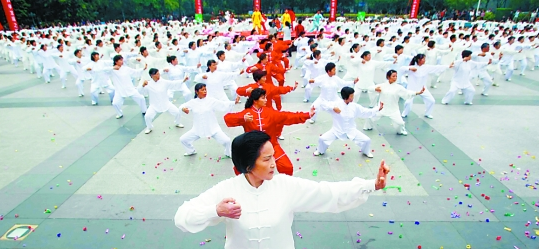
Tai chi emphasizes a combination of action and stillness, yin and yang, activity in the body, but calm in the mind. The external action is composed of a series of rounded movements and the inner exercise functions to promote the circulation of qi and blood under the intention of the mind. This combination is capable of balancing the yin and yang and strengthening the qi and blood within the body to make the person more energetic. Tai chi has the function of nourishing the “shen”, tonifying qi, strengthening kidneys, tonifying spleen, regulating the meridians, and nurturing the tendons, bones, and joints. Moreover, it can be used in supplementing the treatment of neurological, circulatory, respiratory, digestive, and muscular skeletal diseases.

There are many different styles recorded in history. Nowadays, the essence of Tai chi has been composed as “The Simplified Style of Tai chi.” The essential points of Tai chi are keeping quiet and calm, stretching the back, and relaxing the body. Coordination of the body involved the use of waist as an axis, continuous movements and an even breathing pattern.

The forms are as follows:
Form 1: Commencing Form
Form 2: Part Wild Horse’s Mane on Both Sides
Form 3: White Crane Flashes Its Wings
Form 4: Brush Knee on Both Sides
Form 5: Strum the Lute
Form 6: Curve Back Arms on Both Sides
Form 7: Grasp the Bird’s Tail, Left Style
Form 8: Grasp the Bird’s Tail, Right Style
Form 9: Single Whip
Form 10: Wave ands Like Clouds – Left Style
Form 11: Single Whip
Form 12: High Pat on Horse
Form 13: Kick with Right Heel
Form 14: Strike Opponent’s Ears with Both Fists
Form 15: Turn and Kick with Left Heel
Form 16: Push Down and Stand on One Leg – Left
Form 17: Push Down and Stand on One Leg – Right
Form 18: Work at Shuttles on Both Sides
Form 19: Needle at Sea Bottom
Form 20: Flash Arm
Form 21: Turn to Deflect Downward, Parry and Punch
Form 22: Apparent Close-up
Form 23: Cross Hands
Form 24: sClosing Form

3. Classical Qi Gong

Classical Qi Gong is another form of body and mind exercise. Presently, it has become very popular in the United States. The practice of qigong can be explained from two aspects, the active and the serene. The active aspect refers to the body exercises and slow movements guided by the mind and breath. Together with self-massage and abdominal style of breathing, the exercises and movements stimulate the internal organs and result in the re-adjustment of the body’s physiological function. The serene aspect refers to the self-exercise of the mind and breath through which the practitioner is able to enter a quiet state that recovers the function parasympathetic segment of the nervous system.

Qigong is an efficient exercise in regulating the body’s physiological functions, promoting its normal functioning, and slowing the aging process. The principles of Qigong are as follows:
• Regulating the “Shen” (mind and spirit): It refers to the regulation of the mind into a quiet and relaxed state. It helps to increase the coordination of the central nervous system.
• Adjusting the breath: Through deep and gentle abdominal breathing exercises, oxygen intake of the lungs dramatically increases. Thus, the cardiovascular and other essential systems of the body are strengthened. In particular, this abdominal style of breathing creates a stimulating function of the internal organs, which would result in the increase of blood circulation to the organs, secretion of the digestive system, and movement of the stomach and intestines to improve absorption of nutrients.
• Improvement of the body: This refers to the body’s posture and movement through exercise and self-massage. The effects of qigong are slow and gentle. In addition, qigong requires a close coordination of motion, mind, and breath, which would be helpful in increasing blood circulation and correcting functional disturbances.
There are many different kinds of qigong exercises but most forms can be divided into three major types: general health type, relaxation type, and the body movement type.

The general healthcare type has ten different sections: “combing hair and massaging face,” “massaging the helix of the ear,” “knocking teeth and clenching jaws,” “knocking the heavenly drum,” “swallowing saliva,” “moving eyeballs and staring,” “massaging the nape,” “rubbing the abdomen and the rib cage,” “rubbing the lumbar and the kidney,” “patting the meridians,” etc.

The relaxation type includes sitting style, sleeping style, standing style, relaxing both sides of the body, and relaxing anterior and posterior of the body.

The body movement exercise are “swaying the head and tail,” “major and minor wheels,” “twitching body wheels,” “turning head and looking at the moon,” “wind swaying the lotus leaves,” “kid kowtowing buddha,” “stretching legs and arms,” “holding both foot,” “rotating hands in a standing posture,” and “collecting and changing stars.”

The use of qigong in health preservation is not uncommon. It has a long history dating back to 2,000 years ago. All patients should study it seriously for their well-being.

4. Ba Duan Jing (Eight Style Movement)

Ba Duan Jing consists of eight different movements, each one of which is simple, short, and effective. Since time or location does not restrict one’s practice, it is quite popular, and consists of two styles. The Wen or sedentary style adopts a sitting position with concentrated mind and attention to one’s breathing. This particular type incorporates knocking teeth, shaking head, gargling throat, massaging the kidney area, swaying shoulder, pressing the scalp, stretching the sole of the foot, etc. In contrast, the Wu or active style adopts a standing position emphasizing body movement. These movements are called “Upholding the heaven and regulating Sanjiao,” “Stretching the bow with both sides,” “Regulating the spleen and stomach,” “Looking backwards,” “Swaying the head and tail,” “Tapping at the back,” “Holding fist and staring,” “Stretching to both soles,” etc.

5. Shi Er Duan Jing (12 Style Movement)

Shi Er Duan Jing is based on the Ba Duan Jing (Eight Style Movement) with the addition of four exercises that are easy to learn, practice, and are effective. There are movements such as “Knocking teeth,” “Swallowing saliva,” “Massaging face,” “Knocking heavenly drum,” “Exercising Gaohuang,” “Upholding the sky,” “Stretching the bow with both sides,” “Rubbing Dantian,” “Rubbing inner kidneys,” “Rubbing yongquan,” “Massaging Jiaji,” “Swinging legs,” etc.

6. Lian Gong Shi Ba Fa (Exercise 18)

Lian Gong Shi Ba Fa was developed by the sports committee in China in 1950 according to the Chinese Traumalogic Orthopedic Doctors Association. It is especially designed for neck, shoulder, and lumbar pain patients.
• By emphasizing inner strength, it facilitates the acquisition of qi.
• It is quite effective in treating qi and blood stasis as a result of lumbar or cervical disorders.
• Similar to other exercises of its type, it is most effective when combined with acupuncture and tui-na/acupressure, since there is a mutual enhancement of therapeutic effects.
• Exercise 18 is unique in that it is a form of treatment as well as a method of prevention. If one continues to practice this form of exercise on a daily basis, many forms of occupational muscular injury and fatigue may be avertable.
Exercise 18 consists of 18 movements divided into five sets:
• The first segment is designed especially for cervical disorders.
• The second set is more suitable for those with lumbar problems.
• The third benefits those who suffer from pain of the extremities.
• The fourth is for articulation and tendon problems.
• The fifth treats organ functions.

A patient’s success story regarding Polycystic Ovarian Syndrome

A letter from one of Dr. Hu’s patient….
Dear Dr. Hu, Beginning at about 12 years of age, I had to deal with unwanted and serious weight gain along with irregular and horrible menstrual cycles. It was not until my mid 20s that a doctor finally told me why: Polycystic Ovarian Syndrome.
The day that I learned this was both a blessing and a curse. I was happy to finally know why I could never lose weight despite every diet and exercise regime known to man. On the other hand, I was devastated when my doctor told me that there was no cure, that I would most likely always have serious weight issues, and it would be difficult to impossible for me to have children. I was put on medication and told to diet. This of course resulted in me gaining about 50 more pounds over the course of the next couple of years, despite the medications.

Finally, one day I faced my problems and began to read every single article or book published on PCOS. There was surprisingly little out there. And what was published all said the same thing that my doctors told me thereby giving me very little hope of change. One book however, mentioned acupuncture treatments that some women claimed to help with their symptoms but not cure them. So I did more research on acupuncture. About that same time, I was working as a psychologist with veterans dealing with chronic pain and decided to invite a guest speaker to one of my groups. He was a wonderful man who specialized in acupuncture.

During the talk, I volunteered myself as the pin cushion for his demonstration. He put one needle in my hand, looked at me and said, “Hm. You have a metabolic disorder and would really respond to treatment.? This was, understandably, quite shocking to me. I spoke with him after class and he suggested that I go find a specialist. A couple of months later, I was browsing on the internet and found you.I remember sitting in your office for the first time and all the things you said to me.
I felt honestly hopeful for the first time in a long time. I decided that day to trust in whatever brought me there to you, whether it was fate or luck. Those few months that I saw you were wonderful and to me, exotically different with the pills, tea, incense burning, cupping, and millions of needles. I always walked out of your office feeling rested and peaceful, and more than that, I felt like I was doing something for the first time to fight my PCOS.
After about three months of seeing you, I went to see yet another doctor about my PCOS. He decided that I needed to repeat some of my tests that I did so many years before. So I had pictures of my ovaries taken again, and to my doctor’s utter disbelief and to my great joy, I had only one small cyst! He could not understand why I came to see him claiming that I had been diagnosed with PCOS when it was clear that I did not have the cysts characteristic of this medical disorder.
I made him go back over my old test results so that he could see that I used to have rings of cysts around both ovaries. I remember him sitting there not knowing what to say. I told him that I had undergone acupuncture treatment over the last several months and that my doctor said that she could help me.To this day, I do not think my doctor believes that this is possible, but I am the proof! I no longer qualify for the diagnosis of PCOS. My ovaries are normal and healthy and my doctor said that there should be no reason that I could not lose weight or become pregnant. I do not think that it would be possible to express my happiness at hearing this. I had a renewed hope of having a better quality of life.
That day I started an intense weight loss program under his supervision. It was my hope that I could finally lose weight. And after much hard work, I lost over 100 pounds and am finally working on losing the last 30 pounds now. What before was never possible, suddenly was. I was losing weight, getting into great shape, and looking good! Additionally, the last time I saw you, you told me that I should go off my birth control pills to monitor my periods. Well, I am still off birth control and have had an unbelievably regular period every single month since then!
I do not know how else to say this but that you saved me. You changed my life. Because of you, I was given the chance of a better life. And I took it. Finally, I was able to lose weight, to feel good about myself, and to just feel normal. I am doing things that I never before would have tried. I am taking yoga, training for a triathlon, and don’t feel weird having people looking at me. I enjoy life so much more and I just want to know how much you were a part of making that happen.
These past two years since I last saw you have truly been a blessing.Now I apologize for the long letter, but I just wanted to tell you my story. It is my hope that in doing so, I am able to find a way to express to you the impact you have had in my life. You are my miracle. I will forever be truly thankful to you and will always keep you close to my heart.

Holly L
Nov. 2006

Dealing with the debilitating, plight of Migraines An Article in Valley Magazine from a patient of Jiling Hu O.M.D. LA.c

Dealing with the debilitating, plight of Migraines

Follow one migraine sufferer as she navigates the path to relieving her pain.

Text by Karyn R. Millet Photography by Nayda Lebron

Many people complain of having a migraine, but those of us who have been diag­nosed know the difference between a true migraine and a really bad headache. As a sufferer of severe migraine headaches for years, I’ve wound up in the hospital emergency room on several occasions, where a morphine drip is the only thing that will dull the pain. These kinds of firsthand experiences, where a migraine takes you beyond a normal threshold of agony, make you realize that you want to be extremely pro-active on your road to recovery.

According to the Oxford American Dictionary, migraine is “a severe form of headache that tends to recur.” Indeed, like many sufferers, I’ve found that migraines have a reoccurring pattern of time and place, which only makes you wonder, “Why can’t these doctors figure this one out?” After all, we’re not talk­ing about a moving target here. I’ve come to the conclusion that there are as many approaches to dealing with migraines as there are diet plans to become slim and trim. And does anything really work?

Well, actually, there are quite a few hopeful approaches to quelling the pain of a migraine. However, it is necessary to take a participatory role in researching the best methods for dealing with this debilitating condition. My battle has been a personal one, integrating physicians, nutritionists, massage therapists, friends and family to find something that works for me.

Step one is realizing that you are in fact a migraine patient. For me, this was quickly accomplished with a visit to the neurologist. “I think all migraine suffer­ers deserve at least one MRI,” Dr. Carl Orfus of UCLA Medical Center told me after my exam. While this is an expensive procedure, it gives you confirmation that what you are experiencing is actually a migraine. At the very least, it was nice to know it wasn’t a tumor causing my pain. The MRI procedure, however, was a bit daunting. I never knew I was claustrophobic until I glided into the MRI chamber, and it became all too clear. I was simply overwhelmed by the sensation and immediately decided to wait my turn for the “open room” MRI, which although still extremely tight was do-able.

Knowing that the pain in your head is now officially a migraine, most migraine sufferers are encouraged to go the traditional medical route, which involves drugs—and potentially lots of them. I started with Zomig and switched to Imitrex. I then advanced to Maxalt and Relpax and have now settled with Frova. According the research, Frova actually helps stop the blood vessel dilation and relieve the pain you already feel. It sounded like a miracle cure, and for some, I’msure it just very well might be. Unfortunately, it is not a sure bet 100 percent of the time.

Tennis champion Serena Williams, who has been a long-time suf­ferer of menstrual migraines (the same that attack me twice a month), also takes Frova. With menstrual migraines, the pain typi­cally lasts from two to five days, only increasing in severity. It is hard to imagine how Williams has been able to achieve her status as a ten­nis star, knowing the pain she regularly experiences. I figured it this drug works for her, I’d be silly not to at least give it a try. However, I’ve found that my body gets used to one kind of drug, and the drug then become useless, at least for a period of time. And, as we all know by now, drugs are really just masking the problem anyway. Where is this horrific pain getting its start?

“Headaches are natural, but they’re not necessary,” states Dr. David Buchholz of The Johns Hopkins University School of Medi­cine in his book, “Heal Your Headache.” To reduce your chances of reoccurring migraines, Buchholz suggests reducing migraine trig­gers, which include such dietary catalysts as wine, chocolate, bananas, yogurt, nuts, oranges and a list of other culinary delights. Quite honestly, it was rather easy for me to eliminate these triggers from my diet, knowing these foods could be potentially causing the intense and long-lasting pain I regularly experience.

Another key point to Buchhoiz’s research is the rebound effect of certain popular headache drugs “…Rebound gradually promotes increased headache frequency and severity,” he States in his book. “It is rarely recognized—at least to its full extent—by the person caught in its vicious cycle. Each headache leads to another quick fix, and each quick fix leads to the next headache and so on.”

I followed Buchhoiz’s recommended dietary plan of attack for an entire year. Within the first five weeks, I did not have a migraine, which I considered a complete and utter breakthrough. However two weeks later, the migraine caught up with me and took out its wrath.

Unfortunately, there never seemed to be sure-fire plan for alleviating my problem.

There have been some migraine-curing success stories with chiro­practic care, homeopathic herbs and oils, as well as kinesiology. I tried all of these for test periods of at least one year without much success. But, I figured unless you try it, you don’t know if it works for you. Everybody is different, and the inherent stresses and strains we carry around each and every day all vary. I like to think that try­ing all of these methods of relief has widened my personal knowledge of my body and what it takes to keep it healthy. And, as I seek out new procedures, it gives my spirit hope that something will indeed be the answer for me.

Perhaps the latest neurofeedback technique is worth some investi­gation. The EEG Institute in Woodland Hills recommends reading “A Symphony in the Brain” by Jim Robbins. “Research shows that the brain’s electric signals are subject to change and that people can be taught to change them,” Robbins notes in his book. This innovative approach involves a series of sessions in which the brain is actually re-trained and strengthened in new ways. According to EEG Insti­tute spokespeople, the results have been very encouraging—not only for migraine sufferers but for those with such ailments as epilepsy, anxiety and depression.

I’ve also recently begun trying acupuncture. After seeing me suf­fer for far too long, a dear friend, Maria, gave me the name of her tried, true and trusted acupuncturist. Dr. Ji-ling Hu. While I must admit the thought of needles pricking the highly sensitive trigger points throughout my body did not sound inviting, after three recent visits to the ER involving morphine drips, I was ready for anything. A needle now or later, what difference does it really make?

Not only does Hu expertly position the acupuncture needles, she also had me try the ancient Chinese technique of cupping. Heated glass bottles are placed on your back in order to increase heat and

combat blood stagnation. Sure, it sounds a bit strange, but it all seems to make sense to me since migraines are in essence a blood flow issue. Gwyneth Paltrow recently made the news when she showed up on the red carpet with her cupping bruises proudly displayed in a backless dress. Mine might nor have seemed as glamorous as Paltrow’s, bur hopefully we both experienced positive results.

Hu also mixed up some some nasty-tasting tea for me ro rake home, which I am still drinking with a forced smile three times a day. And, just for good measure, she applied four tiny tacks to each ear, which I am to squeeze as pressure points throughout the week until my next visit. Well, if nothing else, it sure gives you something to talk about at the next cocktail party.

I must confess, however that my monthly bout with migraines less­ened in severity and length after Hu’s mix of ancient remedies. I’m now responding to the Frova medication and needed just one dose to get me through the worst of it on my last migraine bout.

My reacrion to acupuncture seems to go hand in hand with a study published in 2004 by the “British Medical Journal”stating, “Acupunc­ture can reduce the number of days of migraine a person has a year, as well as reducing the amount of medication needed.” This was, howev­er, challenged just a year larer in a report by the BBC claiming, “Fake acupuncture works just as well as the real thing in relieving migraines.” Narurally, one is to now wonder. However, as a friend told me just yesterday, “If it works for you and you feel berrer, then it is really working.”

These are just a few of the preventive measures that migraine suf­ferers like me are trying. It is a battle that can and will be won. Every day there are new roads to take, like Botox, Butterbur and rhe Tran-scranial Magnetic Stimulator Gun. Keep your ears and eyes open. Most of all, take time to relax, be still and take a deep breath. Live your life for those glorious momenrs when you are pain-free, and any­thing is possible. VM